
Study Quality in the Age of AI
- A five-element framework for AI in research
Speaker:
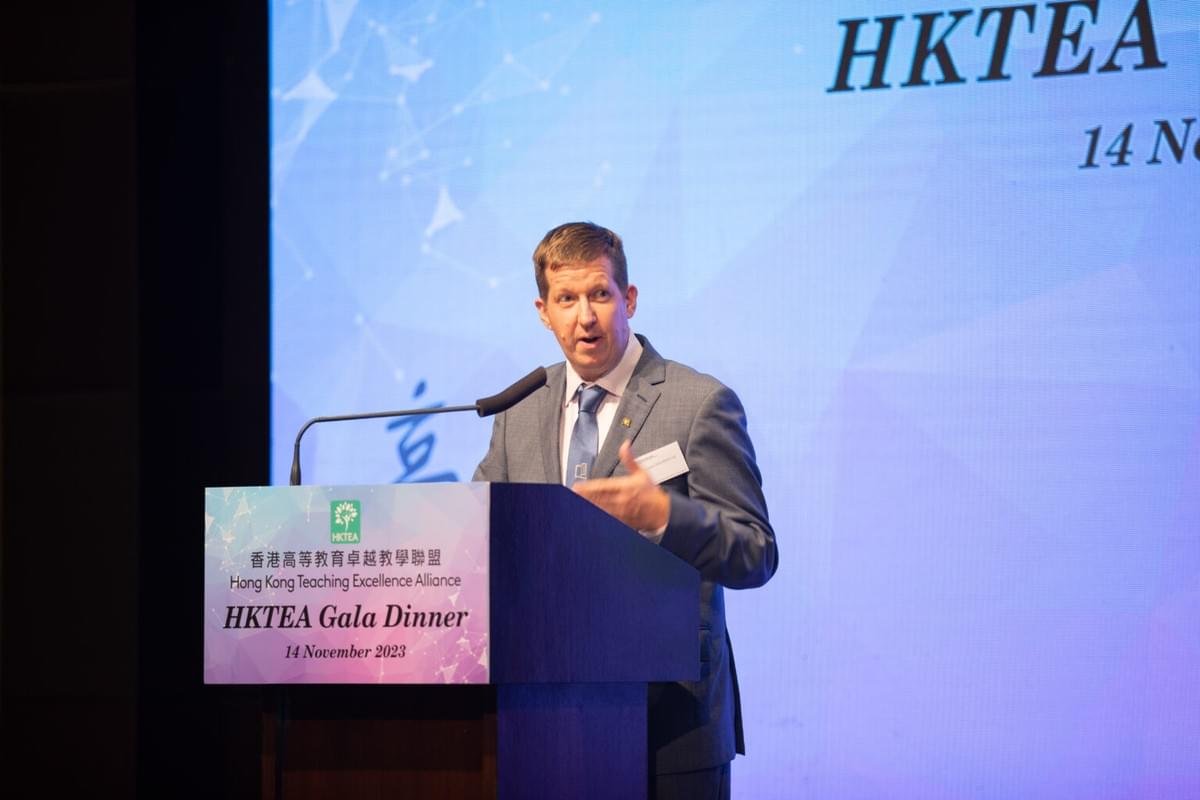
Prof. Benjamin Luke Moorhouse is an Associate Professor in the Department of English, City University of Hong Kong, China. He has extensive experience as a primary school English language teacher. He has worked for the Education Bureau, Hong Kong Baptist University (HKBU), and the University of Hong Kong. He has received several teaching awards, including the President’s Award for Outstanding Performance in Individual Teaching from HKBU in 2023. His research focuses on the lived experiences, competencies, and professional learning of language teachers and teacher educators. Currently, he is exploring the impact of GenAI on language teaching and learning. He has published widely in international journals, including TESOL Quarterly, Applied Linguistics Review, System, RELC Journal, and ELT Journal. His latest book is called Generative Artificial Intelligence and Language Teaching (Cambridge University Press, 2025). According to Stanford University, Benjamin was in the top 2% of cited scholars worldwide from 2022-2025.
Overview
Since ChatGPT’s release, there has been confusion about how Generative AI (GenAI) tools can be responsibly utilized in research processes. While there are many examples of inappropriate uses of GenAI, there are also growing examples of its potential utility. In addition, GenAI use has become normalized in many scholars’ academic writing and knowledge-production activities. The rapid adoption of GenAI into researchers’ practices has outpaced our understanding of ethical appropriateness and empirical explorations into the tools’ efficacies in supporting research tasks.
Responding to a lack of standards and guidance in the TESOL field regarding using GenAI in our research activities, we propose a disciplinary framework for using GenAI in research. This framework, built on four elements of quality study proposed by Plonsky (2024): (1) transparency, (2) methodological rigor, (3) ethics, and (4) societal value; with an additional element proposed by us, (5) human accountability, can assist scholars in making more informed decisions about the use of GenAI at different stages of their research process - from conceptualisation to dissemination.
In this talk, I’ll provide important considerations that scholars must know if they plan to implement GenAI in their research process. I’ll also introduce the framework, and discuss ways it can be used by authors, journal editors and reviewers to inform their work. I’ll end the talk with a call for the education community and other disciplines to adapt our framework to meet their needs.
HOW TO ATTEND
Date: Oct.28th, 2025
Time: 15: 00 (CST)
Online Registration (Scan Codes or Copy Link)
https://forms.gle/RkJ3qrXYMMN4bFGm8
China Mainland Users
International Attendees
Registered listeners will receive the link of attendance.
Meeting ID: 859 8531 6884
Passcode: 069204
